Collaboration is one of those words that we all know is important, but without much understanding or support, how do we know how to do it well? In the classroom, it’s not just about putting students in groups and letting them get on with it – “productive collaboration” requires more intentionality. This also applies to the workplace – how can we support positive collaboration to make teamwork both an effective and enjoyable experience to get the best outcome for all? Fiona Young and Ricky Gagliardi share their insights into collaboration and a tool they have been developing to foster improved teamwork.

In architecture, the Starchitect, or lone genius is a myth. It’s rare for one person to be able to single-handedly deliver a project from start to finish. Architecture is a team game. It requires a range of skillsets to deliver a successful project – from conceptual thinkers to documenters, technical experts, and client engagement specialists. Collaboration is critical.
All too often though, the focus on delivering an end goal (a building) dominates the process of working together without taking the time to understand how best to work as a team to make the experience effective, enjoyable, and constructive for all. Working on projects can be complex, not just because of the range of tasks required to be done, but also in relation to how we work with each other. We’re all individuals, with different personalities, skillsets, strengths, weaknesses, and at different stages of our career. Whilst there’s an organisational goal to ‘get the job done’, we may also have personal aspirations and goals for each project we embark on, for example, to learn more about a new typology, or to engage effectively with clients.
In some cultures, (Denmark of course!), collaboration is taught at architecture school. Tools such as Belbin are used to build more interpersonal awareness for more effective teamwork. This benefits teams who work together in the same physical location and is even more important in large practices and on projects where teams constantly shift and expand and may include members working remotely across different studios and locations. In this context, how well do we know who we’re working with and how to best work with each other? And how do you even begin to have the types of conversations that support a more intentional development of personal and relational connections within the workplace?
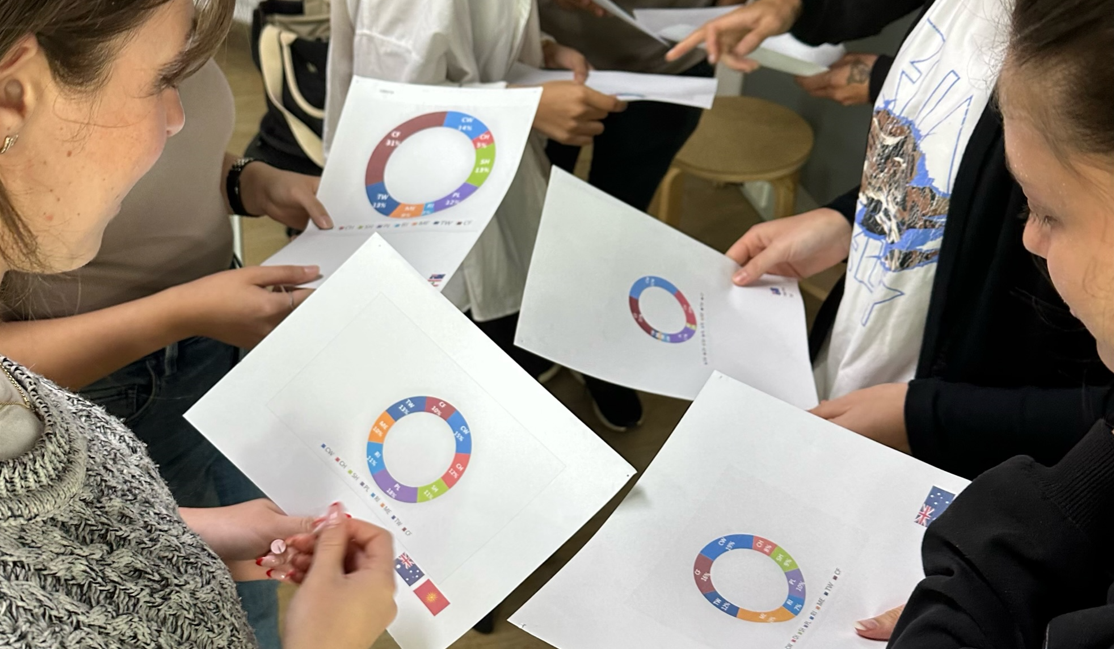
Students discussing their Belbin test results
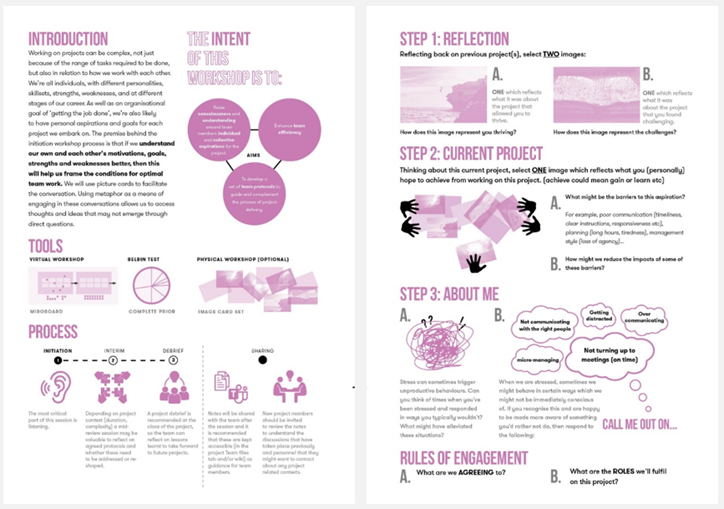
These questions have led us to develop a tool to support effective teamwork, applicable across key stages (beginning, middle & end) of a project. To help facilitate conversations and support people to articulate thoughts and ideas that may not easily emerge through direct questioning, we use picture cards for participants to reflect and share experiences, motivations, strengths and weaknesses toward developing shared understandings and expectations for working together. The premise behind the process is that if we better understand ourselves and each other, then this will help us create a social contract to frame the conditions to optimise teamwork.

Image courtesy of LEaRN
On one level, this tool is a creative way to meet people. In its testing phase, an early career colleague reflected that it was useful as an “ice breaker” for new team members and was incredibly beneficial for collaboration between interstate teams. It enabled deeper understanding as the process brought “an additional level of awareness for each other, how we like to work, and what our skillsets are”. The metaphorical aspect offered by the picture cards support an openness to conversations which are less likely in more conventional meetings. A senior staff member noted that the process “developed a culture in the team to be honest and to develop trust, which allows you to tackle things head on”. This feedback makes us think we are on the right track as surely honesty and trust are fundamental for productive collaboration.
Getting to know each other has a huge impact on how people work together. In socialising the need to support effective collaboration, we will continue to trial, test and evolve this tool with other colleagues. We would also love to hear from others what tools and techniques they use to unlock the full potential of their staff, colleagues, collaborators or fellow students toward effective collaboration.
Fiona Young leads Integrative Design and Strategy at Hayball Architects in Sydney, Australia. She co-developed this collaborative team building tool with her colleague Ricky Gagliardi, who recently graduated from his architectural studies at the University of Technology Sydney.
 Integrative Briefing for Better Design
I love this approach to collaboration. Introducing cards into it is such a great way to reduce the perceived “weightiness” of contributing. The reflections of the participants really attest to its value.
I’m a big fan of Brain Writing for its inclusivity, potential to reduce bias, and the space it gives to build on other people’s ideas without judgement. Here’s a quick précis if you’re interested: https://www.perplexity.ai/search/describe-brain-writing-what-it-P05eXiWdQBqN8KK0jigdsA