The Social Contract: Tools for enhancing collaboration

Collaboration is one of those words that we all know is important, but without much understanding or support, how do we know how to do it well? In the classroom, it’s not just about putting students in groups and letting them get on with it – “productive collaboration” requires more intentionality. This also applies to the workplace – how can we support positive collaboration to make teamwork both an effective and enjoyable experience to get the best outcome for all? Fiona Young and Ricky Gagliardi share their insights into collaboration and a tool they have been developing to foster improved teamwork.

In architecture, the Starchitect, or lone genius is a myth. It’s rare for one person to be able to single-handedly deliver a project from start to finish. Architecture is a team game. It requires a range of skillsets to deliver a successful project – from conceptual thinkers to documenters, technical experts, and client engagement specialists. Collaboration is critical.

Continue reading
Using tools to ask the right question – Is effective learning and teaching possible in the classroom?

In the tertiary realm, learning space discourse over the last twenty years has been vexed by the question Do students actually learn better in Collaborative Classrooms compared to traditional classrooms such as lecture theatres and tutorial rooms? With considerable expenditure associated with the design, construction, training, maintenance, and upgrade of technologies within Collaborative Classrooms, universities need to know if the investment is worth it. Jo Dane discusses the RateMyClassroom tool and the value of tools to support space evaluation.

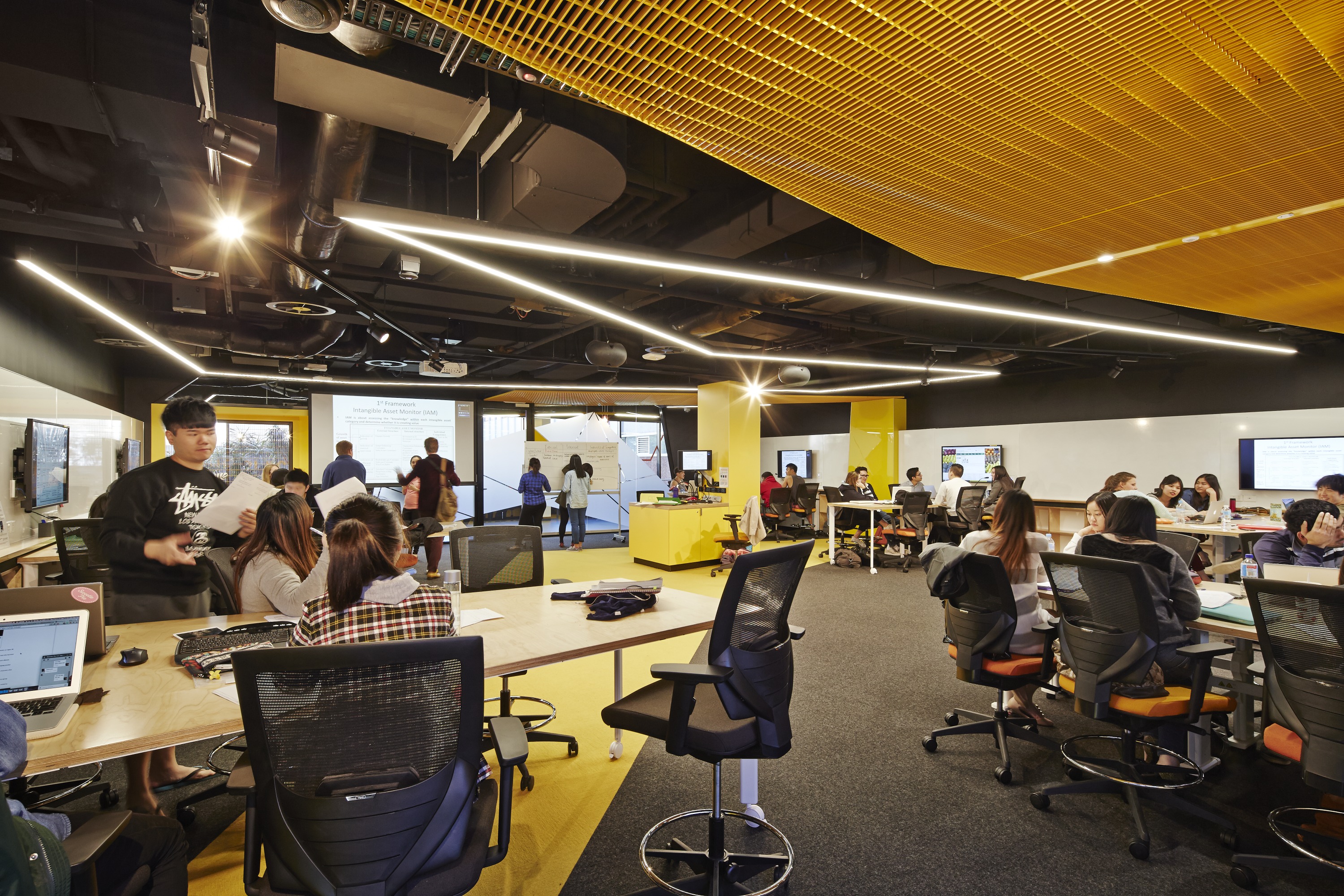
Flipped Classroom, UNSW Business School. Image: Woods Bagot

‘Collaborative’ or ‘Active’ Classrooms began appearing on higher education campuses at the turn of the 21st Century to support teachers practicing student-centred learning (for example, collaborative learning, project-based learning, problem-based learning etc). While the terms ‘collaborative’ and ‘active’ classroom are relatively interchangeable, they typically refer to a classroom comprising small group settings where students can work together, access technology (&/or connect their own devices) and in which the teacher is encouraged to move around the room to support student learning. The teacher may provide some instructional learning to the whole class, but then facilitate group work to apply new concepts through a range of student-centred learning activities. This was believed to encourage students to adopt a deep approach to learning.

Continue reading