Circular economy – starting from a chair in a room

The circular economy provides great opportunity for our planet. It presents the concept that in an industrial age we can use and regenerate natural resources whilst continuing to evolve with the challenges of exponential modernisation and the insatiable desire for growth. As the challenges are enormous and opportunities endless, it’s difficult to know where to start. Clayton Bristow lends some inspiration from Eliel Saarinen looking forwards and backwards from “a chair in a room”.
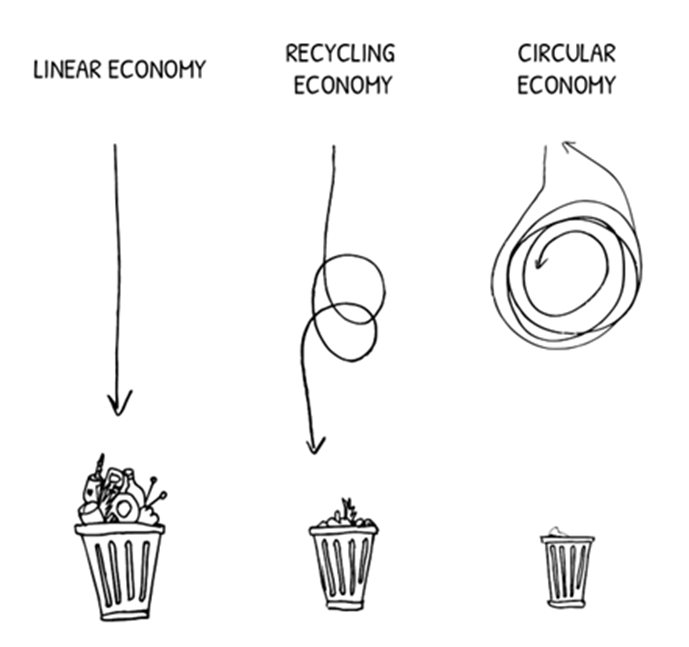
Image source: Recycle Devon

The circular economy is an economic framework to keep resources in circulation for as long as possible to reduce our impact on the planet. More than recycling, the circular economy is an ecosystem of initiatives that requires structural change to the incumbent linear approach of dig, make, use, dump. A roadmap for value destruction.

Continue reading

Change From the Outside (Part 1)

Thriving in the ‘next economy’ requires designing for all of life, and caring for place, within social and ecological systems (Thakara, 2015). The Heart Gardening Project in Melbourne, Australia is one such example of the creation of ground up initiative for a “leave-things-better economy”. Founder, Emma Cutting, discusses how this community-led street gardening initiative has scaled up to its current focus, the Melbourne Pollinator Corridor, an 8km, community-driven, ecology-centred wildlife corridor for native pollinating insects in central Melbourne.

I first experienced the untapped goldmine of opportunity that is street gardening in 2016, creating and maintaining a tiny garden outside my rental. To me, street gardening is its own type of gardening -different to guerrilla, private and government plantings. This is the mindset and approach we use for all types of green public spaces. I define Street gardening as creating and maintaining a public garden (often by a resident outside their home) combining site awareness, observation and immersion with a particularly determined, caring, generous, positive and community-centred mindset.

Continue reading

Better Integrative Briefing: Country, Community and Cultures

The Collective Environment (bringing together both the natural and constructed) requires diffusing siloed thinking and allowing for a circular process through time where design informs the brief and briefing informs design. To achieve this approach, we can learn a lot from Indigenous ways of thinking. In this guest blog, Marni Reti explains what it means to design with Country.

An Indigenous world view is concentric, not linear. All people and things are a part of Country, inclusive of all things that were and all things that will be – both naturally occurring and constructed by people. Therefore, what we design, what takes up space, becomes a part of the Country it occupies. This is one of the many reasons why we, in Australia, acknowledge Country at every event and encourage everyone to know which Country and whose land we stand on. It also means designers have an inherent responsibility to Country and the communities that it affects.

Continue reading

Architecture Beyond Buildings: Reframing Sustainable Design

As we become increasingly aware of the need for regenerative design, Jim Gall discusses traditional architectural perspectives of sustainability and the need for architects to re-think design to ensure a more sustainable future.

Image courtesy of Jim Gall.

An overarching problem for now and the future is the design and making of human habitation that can sustain and be sustained by the ecosystems that support it. This makes sense as the way humans can continue to inhabit the Earth.

Continue reading

To Share or Not to Share

Jacques Chevrant reflects on the need for the Architecture, Environment & Construction Industry to look outwards and learn from other industries to better engage with innovation and knowledge sharing to ensure long-term sustainability.

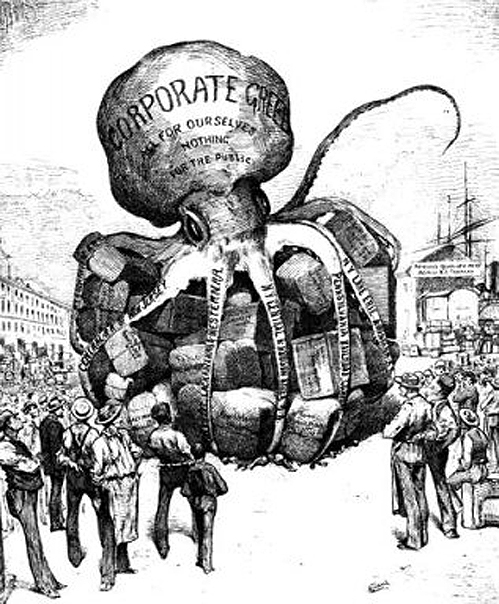
Image Source: https://upload.wikimedia.org/wikipedia/commons/7/78/Corporate_greed_octopus.jpg

Reflecting upon the competitive nature of the Architecture, Environment & Construction Industry (AEC), the for-profit organisation residing within has increasingly behaved like a silo. Intellectual property amidst innovation is closely guarded, used as a tool for maximising competitive advantage.

Continue reading