Vertical Schools as Community Hubs

Integrated briefing for better design is underpinned by a new social consciousness, combined with sustained efforts to stop thinking and acting in silos. If cultural, built, and natural environments must be considered together, then an integrated approach to design must connect the spatial, virtual, and organisational elements to create better urban experiences and places. The rapid emergence of vertical schools – perhaps the most critical contemporary form of Australian urban infrastructure – provides an excellent opportunity to leverage the potential of integrated approaches to design. In this guest blog, Tony Matthews discusses the need for the design of vertical schools to be considered across scale, from urban to building to interior, across domains, from education to policy, and inclusive of the range of stakeholders from school to local community.

South Melbourne Primary School. Image courtesy of Hayball.

The vertical school typology is a transformative departure from traditional school design, where buildings follow a horizontal, low-rise profile and school campuses are often on large land parcels with plentiful green space. Vertical schools are usually between four and seventeen storeys. They are designed to accommodate the full range of teaching, administration, and recreational activities within one or two buildings.

Continue reading
Soft-skills is the key

Raymond Young discusses the importance of soft-skills for project management and invites us to participate in research contributing to the development of a tool to assess soft-skills required for project success.

Our conception of a project is probably flawed. I came across Figure 1 in a project management textbook and thought to myself, “that’s not the way it really happens”. Figure 1 gives the impression that each stage of a project takes roughly the same length of time when in fact initiation of a project can take many years (while people think about what they actually want) and realising the benefits should be as long as possible. The problem with Figure 1 is that it is a project manager’s view of the world – the focus is on planning, development and implementation.

Continue reading

Integrative briefing: An inclusive and iterative process

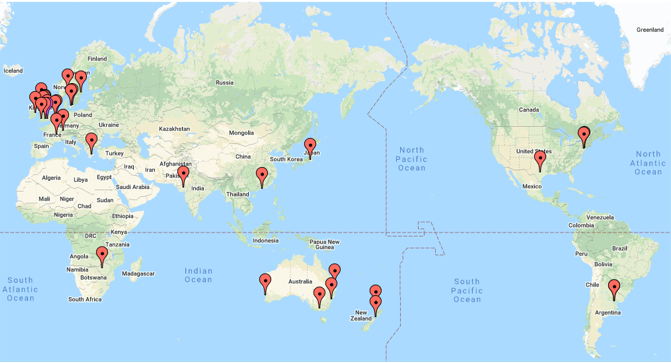
Between March and August 2021 we hosted six international Sounding Panel sessions with participants from across 16 countries and six continents.

Each session brought researchers & practitioners together to discuss, debate & evolve collective understandings of briefing from the scale of a chair to the urban context.  In particular, this process has helped expand and shape our understandings of integrative briefing & the direction of the next iteration of the book. A summary from the first six sessions can be downloaded below.

As you can see, there are still many parts of the world we haven’t heard from. If you are from a part of the world not currently represented and have an interest in briefing, or know of others who might like to contribute to the conversations, please let us know.