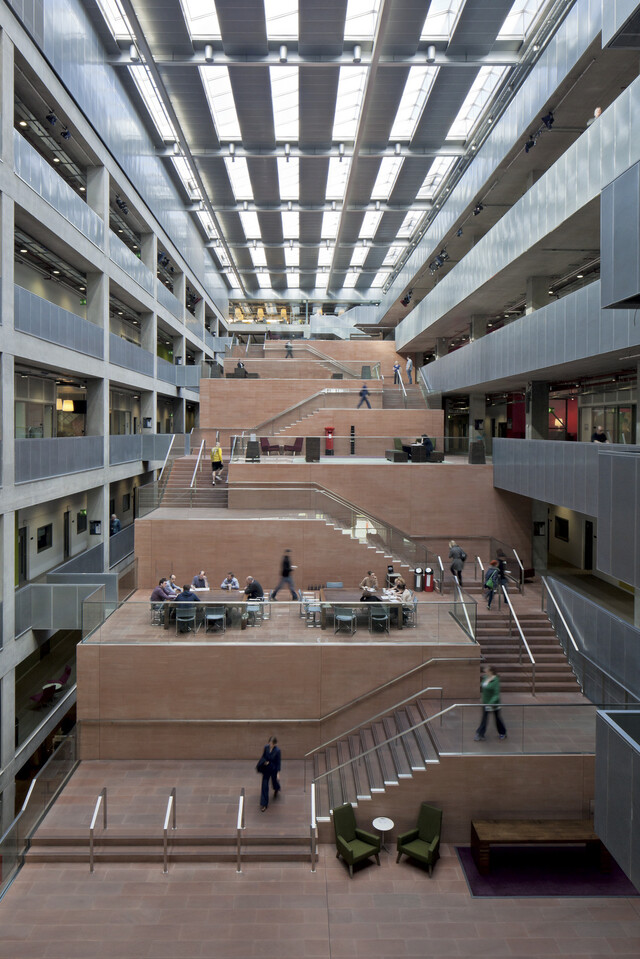
Vertical Schools as Community Hubs

Integrated briefing for better design is underpinned by a new social consciousness, combined with sustained efforts to stop thinking and acting in silos. If cultural, built, and natural environments must be considered together, then an integrated approach to design must connect the spatial, virtual, and organisational elements to create better urban experiences and places. The rapid emergence of vertical schools – perhaps the most critical contemporary form of Australian urban infrastructure – provides an excellent opportunity to leverage the potential of integrated approaches to design. In this guest blog, Tony Matthews discusses the need for the design of vertical schools to be considered across scale, from urban to building to interior, across domains, from education to policy, and inclusive of the range of stakeholders from school to local community.

South Melbourne Primary School. Image courtesy of Hayball.

The vertical school typology is a transformative departure from traditional school design, where buildings follow a horizontal, low-rise profile and school campuses are often on large land parcels with plentiful green space. Vertical schools are usually between four and seventeen storeys. They are designed to accommodate the full range of teaching, administration, and recreational activities within one or two buildings.

Continue reading


How to use a building

Inhabiting new space is often a matter of trial and error. New spaces can often be confusing or frustrating for inhabitants until they ‘see’ how they might use them. Bridging design and use requires an alignment between organisational ethos, inhabitant practices, and the spaces themselves. Fiona Young discusses how a ‘user guide’ might help inhabitants transition to new spaces, and in their ongoing use.

When we buy a new appliance it’s likely to come with instructions on how to use it. But when users encounter new buildings or spaces, they tend to be left to their own devices to uncover available features or to troubleshoot potential issues that might arise.

Continue reading

The Key to Client Education

A Google search on the term ‘architect’ predominantly brings up images of a lone practitioner working over a set of building plans or an architectural model. This stereotyped view of architectural practice can mask the value which designers may bring to the design process toward optimising ‘outcomes’. Laura Weiss discusses the opportunity for greater consideration and transparency of the ‘client journey’, and the value that designers can bring as advocates, or trusted advisors.

Image: IDEO Reimaging the shopping cart

By the time we’re adults it’s likely that many of us have interacted with a doctor, maybe an accountant, perhaps a lawyer, or at least we know someone who has. It’s equally unlikely that the general population has purchased or been involved with the services of a professional designer of any kind.  As a society we unfortunately have a limited frame of reference for how design happens or why it’s valuable.

Continue reading

Building Tomorrow – Lessons from the Intersection of Architecture and Technology

Integrative briefing blurs boundaries within and across domains, whether spatial, organisational, or professional. This requires new ways of working, and processes and tools for communication and collaboration toward a common language. Coming from a background of traditional architectural practice and now working in the technology sector, Nick Caravella reflects on what he’s learnt in his quest for interoperability to bridge and improve the process of design and construction.

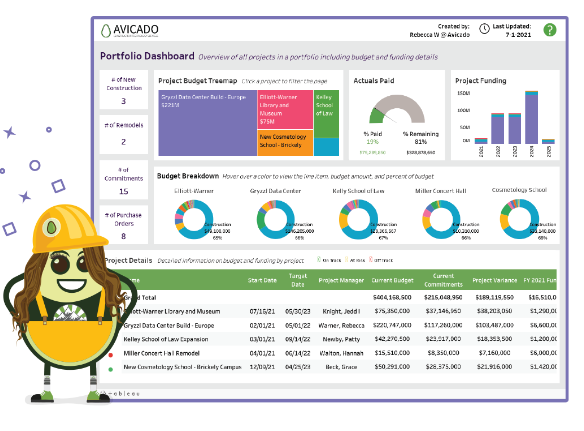
Image source: Avicado

There’s an inherent charm to the arrival of a New Year—a time for reflection as one year concludes and another unfolds, offering an opportunity to trace one’s path. Four years ago (2020), I found myself contributing to the Practice of Architecture. Freshly pivoted from traditional practice into the technology sector, I was eager to share the insights gained from this shift. Two articles, Why Tech Stole ‘Architect and An Architect’s Guide to Anything but Architecture chronicled my journey from traditional practice to the construction technology sector.

Continue reading

Service Designing Architecture

What can the long-established profession of Architecture learn from Service Design, a design discipline that emerged in the early 90’s? As we navigate the future of professions in the context of rapid technological advancement, Laura Weiss discusses the opportunity for architects to draw upon the experience focused lens of Service Design to redefine the process of architectural design for successful outcomes.

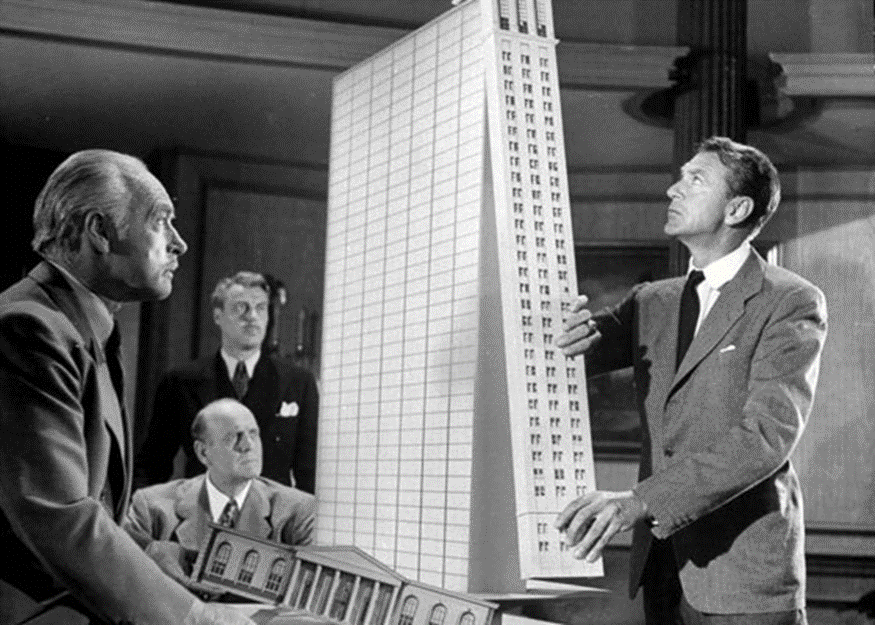
Image: ArchDaily Films & Architecture: “The Fountainhead”

Let’s face it: architects are service providers, not builders. Yet architects and the media almost exclusively focus on the building artifact as the primary source of value delivered, and firm portfolios as the primary differentiator. We rarely acknowledge (and provide minimal education for) the leadership skills required to guide clients and other stakeholders through a whole series of complex and often unfamiliar decision-making activities that affect a successful outcome. The overall experience of engaging with architectural services has evolved very little.

Continue reading

Happy Holidays & see you in 2024!

As we embark on the holiday season we send our best wishes to the Integrative Briefing network around the world. Thank you to all our supporters and contributors to the book and website. 

We are working towards completing the book in the first half of 2024! Beyond publication, we look forward to continuing the dialogue through this website and via other forums. 

Please follow us on LinkedIn and if you would like to contribute a guest blog to our website please let us know. 

Happy holidays!

Alastair, John, Hiral, Fiona & Clare

Redesigning for all of Life

“Bucky” as Buckminster Fuller was known, was a renowned futurist, inventor, architect, systems thinker, and designer. He encouraged radical innovation that supports whole systems design-thinking. In our final guest blog of the year, Climate and Sustainability Leader Barbara Merz puts out a call to action to activate a lineage of interdisciplinary design-thinkers committed to extending Fuller’s lifetime endeavor to make the world work for all of life.

Having led global campaigns to address climate and sustainability around the world, my work has meant that I have witnessed over-and-over the horrors of sudden climate shifts. Compounding disasters reveal chronic deficiencies in disaster preparedness coupled with deficient design for a rapidly evolving planet.

Continue reading

What’s the problem? Getting to the heart of the issue through strategic design

MADE by the Opera House, also known as the Multidisciplinary Australian Danish Exchange, is an Australian-Danish exchange program that is offered to Australian and Danish students of architecture, engineering and design (in the built environment). Between 2014-2023, each year five students from a NSW university and five students from a Danish tertiary institution participated in the program in Denmark and Australia respectively. This year, for the first time, a student from the field of Strategic Design was part of the program. Isac Lindberg reflects on the MADE experience as a collaboration across disciplines and on the role of strategic thinking to get to the heart of the problem to be solved.

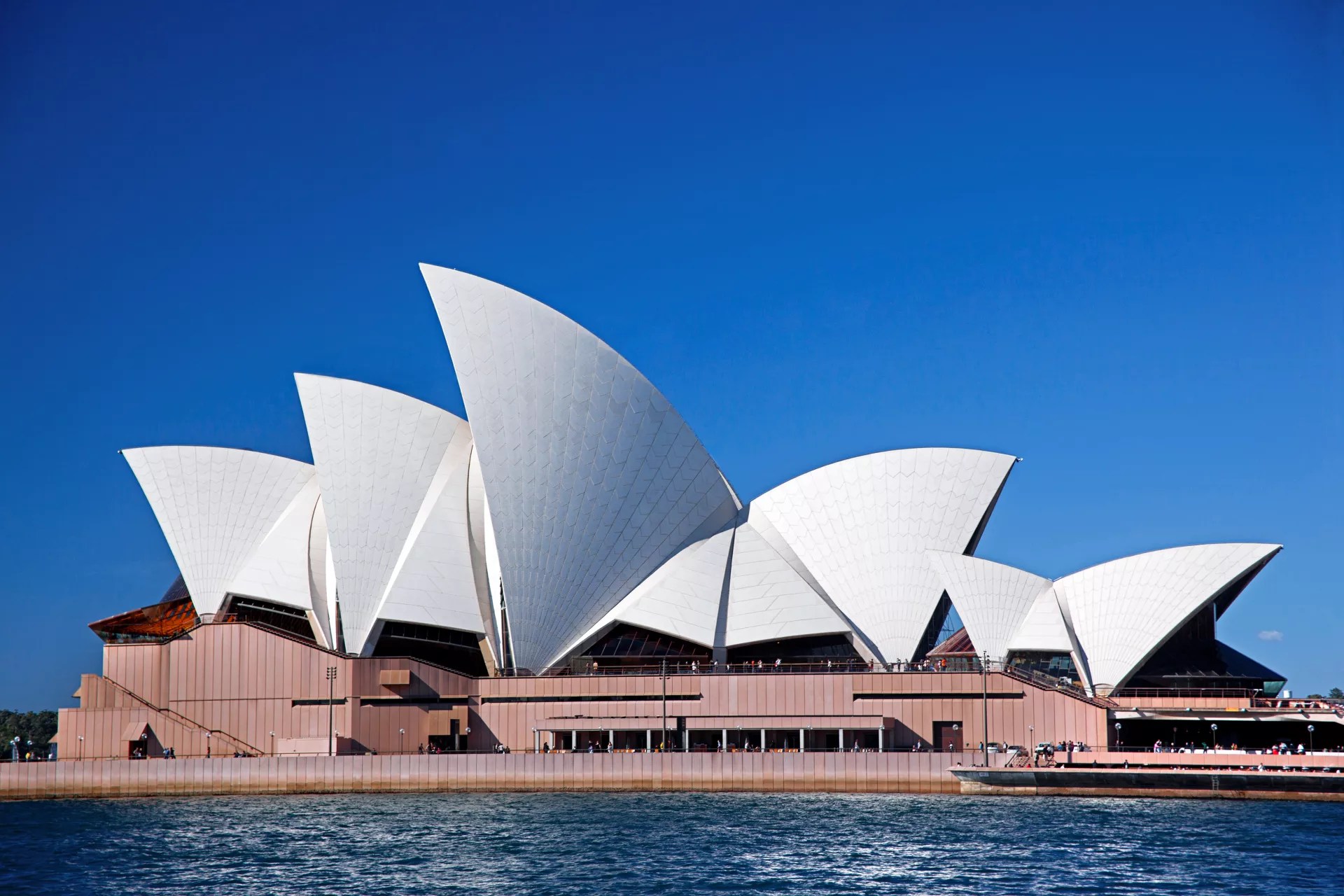
In late August, I found myself presenting in the Utzon Room at the Sydney Opera House. As part of the Sydney Opera House MADE program, I had just completed a six-week interdisciplinary exchange where I collaborated with four other students from different Danish universities who specialised in architecture, engineering, and design. Despite the obstacles of working as a group of initially, complete strangers, this experience highlighted the significance of interdisciplinary collaboration and how our diverse skills and ideas played a vital role in shaping our proposal for the Opera House’s Central Passage.

Continue reading

From Relational to Transformational: Achieving ‘value-for-money’ in school design

What do we mean by value? In this guest blog, Gary Adsett shares the “value-thinking” taking place at policy level in the development of independent schools across Queensland, Australia. He discusses how value-for-money is considered to maximise educational outcomes.

Caloundra Christian College. Architect: McLellan Bush.

I lead a Block Grant Authority that provides capital funds to Queensland independent schools to support their construction of new buildings and refurbishment of existing ones. The collective amount of funding distributed is significant, particularly when considered over a 10-year funding horizon. As with any investment, there is a desire to achieve a value-for-money outcome to maximise the return on investment. This funding is considered an investment toward the provision of high-quality student educational outcomes.

Continue reading

Architecture and affordance: the uselessness of ‘use’ and ‘users’

Reflecting on his experiences from briefing for a building, to selecting an architect, to being a Professor of Architecture, David Porter discusses the shift from a jargonistic approach to architecture, to a richer and more nuanced view of the relationship between the environment and inhabitants.

Image: BBC Scotland Headquarters, David Chipperfield Architects.

When I was a student, I learned that buildings have “users” – I now see this as misleading and meaningless jargon – we are inhabitants.

Continue reading