The circular economy provides great opportunity for our planet. It presents the concept that in an industrial age we can use and regenerate natural resources whilst continuing to evolve with the challenges of exponential modernisation and the insatiable desire for growth. As the challenges are enormous and opportunities endless, it’s difficult to know where to start. Clayton Bristow lends some inspiration from Eliel Saarinen looking forwards and backwards from “a chair in a room”.
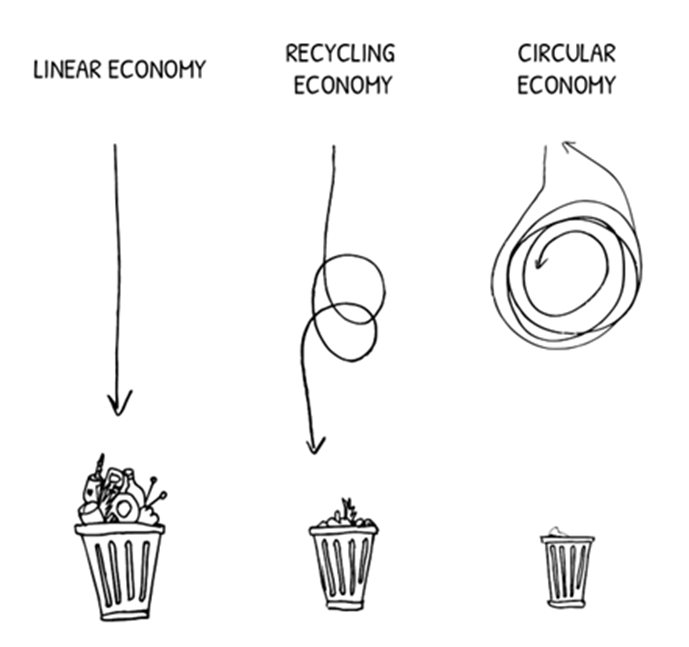
Image source: Recycle Devon
The circular economy is an economic framework to keep resources in circulation for as long as possible to reduce our impact on the planet. More than recycling, the circular economy is an ecosystem of initiatives that requires structural change to the incumbent linear approach of dig, make, use, dump. A roadmap for value destruction.
The circular economy starts with design. Firstly, a design of a supply chain that can operate forward as well as backward, and secondly a design of product and materials which can boomerang into use and back to the supply chain from where they came.
A chair provides a great case study into what works and does not work in a circular economy. With a chair, we can understand where the raw materials come from, how they can be designed into a product and how those materials can be repaired, reused, repurposed or recycled to create the same or new products. We can interrogate the design details which enable a myriad of concepts but at every decision point answer the question, what happens to this product when it reaches the end of initial use? We are also able to work out a chair’s proximity to manufacturing bases or facilities which can repurpose the original design in meaningful ways.

Image source: Bryer Design
What doesn’t work is design which is devoid of longevity and inherently only values an initial sale without wider consideration of the industry from which it obtains economic benefit – fast furniture, unlike the infamous 24yr old Big Mac, will not stand the test of time.
Alarmingly in Australia, each year we generate 30,000 tonnes of commercial furniture waste, with 95% of this ending up in landfill. But that doesn’t mean there aren’t alternatives. A growing industry of solutions is emerging, and to support that industry requires owners of assets to seek out landfill alternatives by asking what is going to happen to this item next?
Social impact organisations are a great example of circular innovation in applying an environmental solution to ease a social problem. ReLove, Oz Harvest & Thread Together take the planet’s largest contributors of waste – furniture, food, and fashion, and divert these resources from landfill to vulnerable communities. Until we transition to an efficient reverse supply chain that is as frictionless as returning products and materials to the point of manufacture (circular economy) as it is in selling/distributing (linear economy), a little bit of elbow grease and a collaborative industry approach can fill the gap.
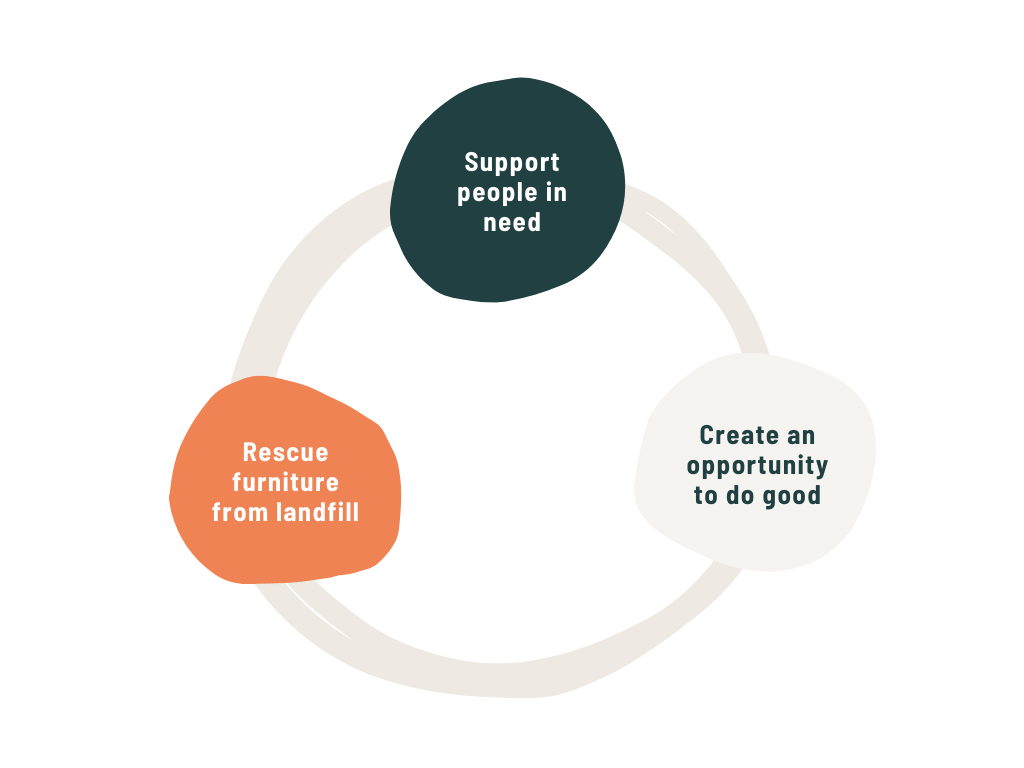
Image source: ReLove website
Good design of products and supply chains provide the foundation for an efficient circular economy. A chair designed for the circular economy is one that lives on. Robust, capable of repair and designed in a way that allows materials to be recovered at end of life, attributes which can all be applied to the design of any product or material.
Clayton Bristow is Founder of FF&3, a circular economy services firm focusing on solutions for furniture in corporate real estate. He has worked in the corporate real estate industry for 24 years and his experience ranges from working at commercial furniture manufacturers to managing major office refurbishments. He recently delivered a 60,000m2 office refurbishment achieving significant reductions in embodied carbon through implementing circular economy initiatives. Clayton is on the board of ReLove, a charity that redirects office furniture from corporate and hotel de-fits to families impacted by domestic violence.
Header photo by engin akyurt on Unsplash
 Integrative Briefing for Better Design